by Emily

I’m thrilled to be hosting Gemma Hollman, medievalist extraordinaire, to my website today! She has a brilliant new book coming out this week and it’s absolutely one you’re going to want to grab. Read on to get to know her better!
This is your third historical non-fiction, a huge achievement! What inspired you to start writing non-fiction books?
Funnily enough, it was actually other people! I had started a history blog after graduating university, because I loved writing and sharing history. It was special hearing friends, family and strangers say that they enjoyed my posts and learnt something new.
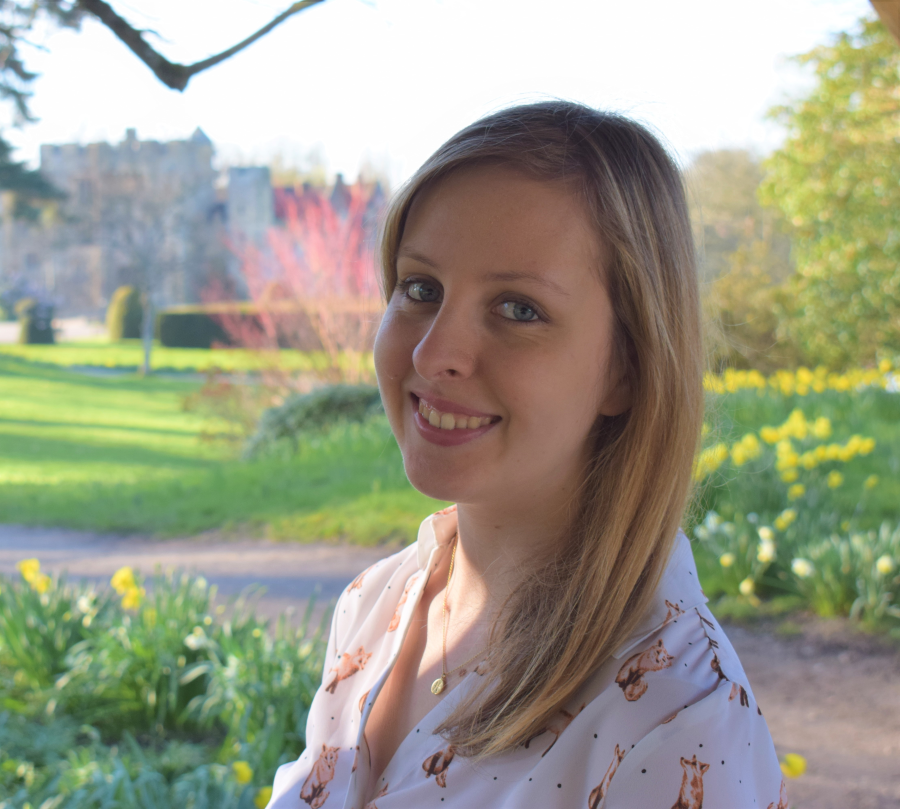
Whenever I spoke to people and told them about my Masters dissertation topic, every time without fail they would exclaim that it would make a good book. After one of my blog posts about one of the women in my dissertation went (what I considered at the time) viral, I figured that there really was an appetite for these women’s stories, and that I was just as qualified – if not more – than anyone else to write them. So I did some research on how to write non-fiction proposals, sent off a hopeful small paragraph, and found success! So my dissertation turned into my debut book, Royal Witches.
Your previous two books are all focused on royalty, whereas your new release, Women in the Middle Ages: Illuminating the World of Peasants, Nuns, and Queens takes a broader class view. What prompted this change?
I actually got approached by a publisher to write this book through an author friend of mine (shout out to Danièle Cybulskie) and at the time was in the midst of negotiations with my publisher for writing a third book (which will now, in fact, be my fourth!). I absolutely adored the pitch, and had never considered doing an illustrated history but thought it sounded immense fun. I had done bits at university about peasant women, and a smidgen on religious women, so I knew bits and pieces about them and that felt enough to give me some leads for my research. I was really nervous about taking on two contracts at once, but decided this was an opportunity I couldn’t turn down – and I’m glad I didn’t. Lots of people are drawn to royal history for many understandable reasons, not least because for women’s history in particular, this is the class that we tend to know most about individuals. But there is a wealth of information about all types of women in the medieval period, so it was great to be able to surface some of that.
One of the challenges of historical research is that women appear – in general – less often in the record. What was the biggest challenge you faced, especially the non-royal figures in your new book?
For me, it was trying to find specific examples of named, known women among the peasant classes. I talk a lot in generalities in the book, to give an idea what life was like and what opportunities were available for women at the time, but I think readers always need to connect with an individual. Hearing that queens could lead battles, then reading about a specific queen who did, or that mystics could be so respected that kings would travel the country to get their opinions and having that proof by citing a particular example all help to flesh out the histories. It not only provides evidence for what you’re talking about, so that the reader doesn’t have to just trust you, but we long to hear about people who came before us, and learning people’s names and hearing even a one-line snippet into someone’s life from one thousand years ago is powerful. But we don’t always have that evidence for the lowest classes in society, and so making sure I didn’t lose that thread was important, but, at times, tricky.
Is there a woman or group of women that surprised you as you investigated the past for your new book?
It was actually the professional class of women that surprised me! I knew from things I had learnt in the past that lower class women did, obviously, have to work to make ends meet, but I thought this was generally limited to farm labour, the hospitality industry (serving food and drink at markets or inns), and the textile industry. But I was surprised to find out that women were actually present in pretty much any medieval industry. True, in certain industries their contribution was limited to menial tasks (take construction, for example, where they were mostly just tasked with carrying equipment and materials), but there were female sculptors, bead makers, illuminators, glaziers, and many, many more.
Your new release is a gorgeous book that highlights the imagery of women in the past. Why do you think it’s important to feature images of women in your book, not just written descriptions?
The visual record opens up so many threads that are left by the gaps in the written record. There were so many images of women in the book that I used that were the sole surviving piece of evidence that that woman ever existed. Following on from what I said before about the gaps in finding information about working class women, whilst the written records can be frustratingly silent, peasant women are found everywhere in medieval art.

People liked to draw and see the world as it was around them, so manuscripts and tapestries very often feature peasants in their everyday life. Another key point is that there were very few medieval women who wrote surviving documents until much later in the medieval period. But you did not have to be literate to create art, and so many of the images of women in my book were created by women. There was a plethora of self-portraits by women, which is amazing to see a woman making a conscious effort to record herself for posterity, but it’s just as wonderful to see the everyday textiles made by women’s hands too. It brings something the written record just cannot.
What is one thing that you want readers of your new book to discover or enjoy as they enjoy your release?
I hope the book just opens horizons for people, introducing them to countries, social groups, or centuries they are not familiar with. Even as a qualified medievalist, there were so many things I learnt writing this book and it’s opened up a whole new desire within me to learn more and read more, and it would be great if I could spark that in someone else, too. And I really, really hope that people enjoy the many beautiful, colourful images within (there are nearly 200 of them!) because they were a joy to find and are lovely to look at.
And as you said, this isn’t your first time writing history! Can you tell us a little more about your earlier projects?
I’d love to ask people to check out my first two books! My first, Royal Witches: From Joan of Navarre to Elizabeth Woodville, looks at accusations of witchcraft against royal women in 15th century England, amidst a backdrop of war and court intrigue. My second, The Queen and the Mistress: The Women of Edward III, follows the lives of Philippa of Hainault and Alice Perrers, the wife and mistress respectively of King Edward III of England, looking at how it was that two women of vastly different backgrounds won the heart of the same man and, as a result, found a seat at the heart of power.
Thank you so much for sharing your thoughts, Gemma, this has been fantastic! Where can my readers find you?
I run a blog called Just History Posts (www.justhistoryposts.com) and I have a connected Facebook page where I share regular smaller snippets of history (www.facebook.com/JustHistoryPosts). I also have an “author persona” on Instagram (www.instagram.com/gemmahauthor) and Threads (www.threads.net/@gemmahauthor) where I share things more related to my writing, as well as occasional blog-related content. Finally, I have a newsletter which you can read for free, and you can also sign up to receive it straight into your email inbox (https://justhistoryposts.substack.com/).
Thank you so much Gemma – I can’t wait to get a hand on my copy!
 Emily E K Murdoch