I have loads of favourites. My grandparents were horticulturalists with their own nursery, with my Mum working for them, and so I was surrounded by flowers and plants growing up. I love them. I love nature!
(I wish I was better at keeping them alive, but…)
But my love of flowers isn’t limited to my childhood. My boyfriend (now husband!) immediately understood my obsession with flowers, and has treated me with flowers throughout our dating life, engagement, and marriage.
In fact, one of my favourite flowers is the purple/blue orchid, the first flowers he ever treated me with.
Flowers have been used in courting for years, and the Victorian era solidified our ideas of the language of flowers, which existed as early as the Regency period.
This secret code was designed to make sure that other people couldn’t immediately tell what you wanted to say to your beloved.
So did you know what a gentleman caller would be saying to you if they sent you…
…a mimosa? This delicate plant meant ‘chastity’, because of the way its petals close up when touched.
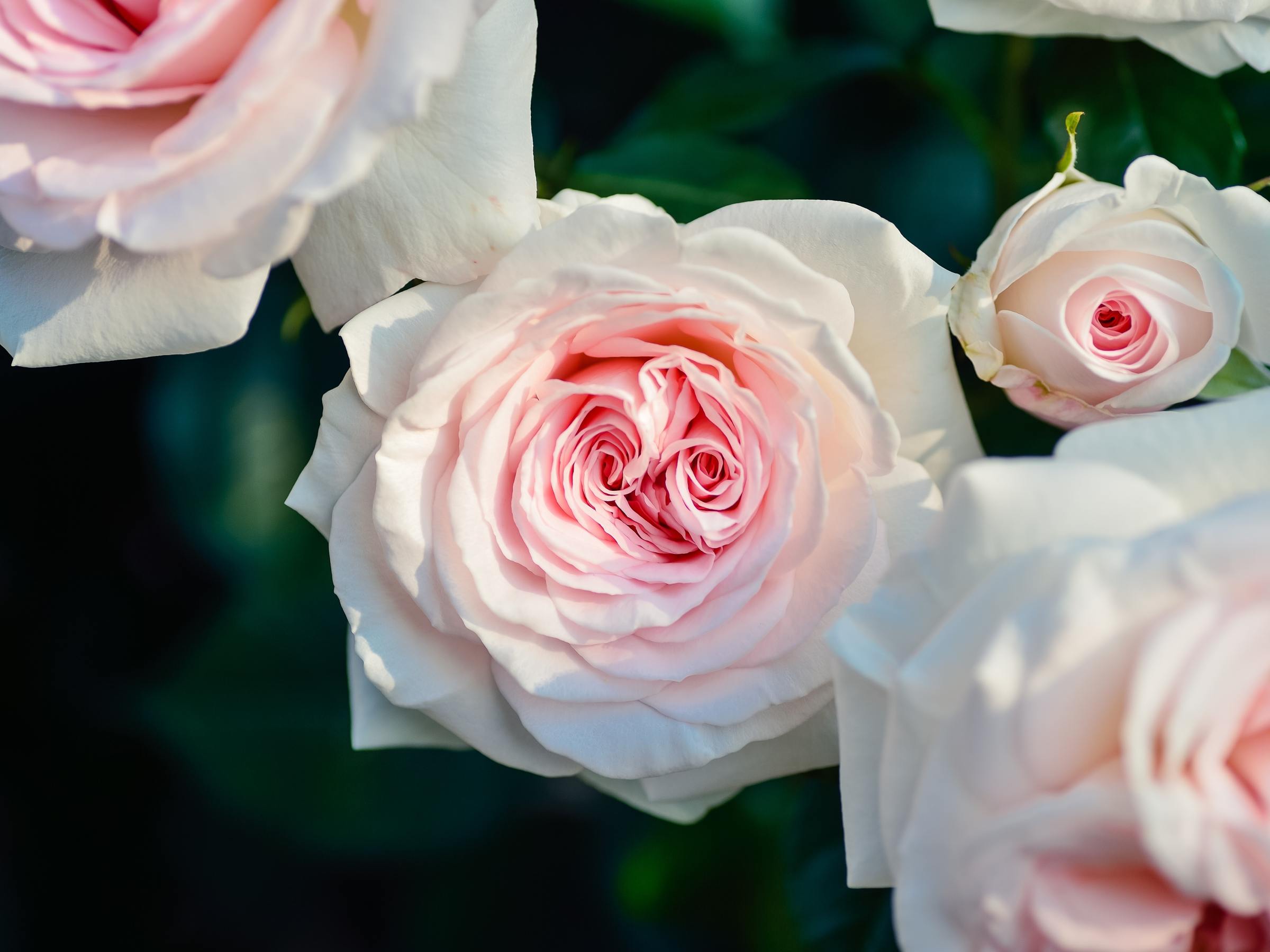
…a dark pink rose? This gorgeous blossom means ‘thankfullness’.
…a sprig of heath lavender? I love this scent, and when given as a gift, it means ‘admiration’.
…an orange lily? Run a mile if you receive this one – it secretly means ‘hatred’!
…a sweet pea posy? My absolute favourite flower, this heavily scented flower means ‘blissful pleasure’ or ‘goodbye’!
Did any of these surprise you? What is your favourite flower – let me know in the comments, and I will tell you what it means!
I have read so many books this year, but some of them just stay with you, don’t they? I wanted to share some of my favourite books from 2024, all for very different reasons.
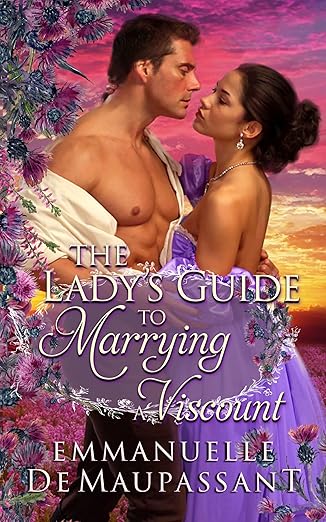
Newly widowed Countess Rosseline has a plan. To keep hold of all she holds dear, she must marry the man who has inherited her dead husband’s estate. Nothing must interfere with her scheme.
However, an obstacle stands in her path. Viscount Wulverton is intent on uncovering her secrets. Meanwhile, Wulverton Hall, on wild and windswept Dartmoor, has secrets of its own…
‘The Lady’s Guide to Marrying a Viscount’ is an ‘enemies to lovers’ gothic romance, featuring passionate scenes and an eerie mystery.
Each full moon, at midnight, the veil between our world and the orcs’ weakens, and raiders can pass through the standing stones…to take what they want. Me.
Bred by the Orc: I have always known my purpose in life was to marry a powerful laird and bear his sons to cement alliances…I just expected him to be, you know, human.
Running from the Orc: I am not easy prey. He doesn’t realize I am a determined sort of female, and I know what I want. If running from him will obtain it, then I will run. And he will hunt.
Wagered to the Orc: I am no stranger to being owned by a male, but my new master is something I never imagined… I know what I must do: I must make him value me so he will not share me with the others.
Ceramic artist Robbie Hawthorne is dedicated not only to his art, but to keeping the arts center and school housed at his family’s ancestral estate vibrant and flourishing. But when the family runs into financial trouble and a heartless corporation offers to buy the estate to turn it into an amusement park, Robbie has to get creative to try to stop them. Toby Tillman has fought to overcome his working-class roots and to make a name for himself in the financial world. Now he finds himself pitted against his old mentor in the quest to save the Hawthorne House Arts Center, which is run by exactly the kind of entitled nobs he’s always hated. Worse still, he finds himself constantly hot for Robbie, a man he should utterly despise. And then comes the road trip and a stay at a hotel with only one bed…
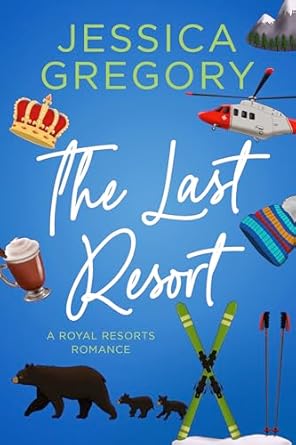
He might be the youngest of the billionaire Royal brothers, but Matthew Royal is still determined to make his own mark in the competitive hotel and resorts business. His grand plans include building a brand new mega resort in Aspen, Colorado. In the aftermath of a dark family betrayal, Rachel Little has moved to Aspen to rebuild her life. Taking a job as a consultant for the owners of the Green Tree lodge, she sets about finding a suitable buyer while endeavoring to save the near derelict historical building from falling into the hands of greedy developers. When a handsome stranger crosses her path twice in a week, Rachel finds herself unable to resist his charms. And what more could a girl want than a passion filled romance to help restore her faith in the world?
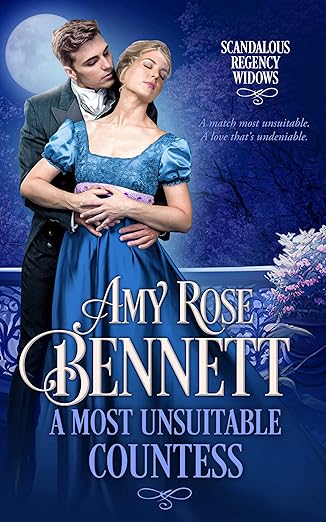
Catherine, the widowed Lady Rosemont, is considered a most unsuitable countess by polite society. Whispers about her checkered history follow her wherever she goes. Was she once a courtesan? Is her young son really the late Earl of Rosemont’s child or a by-blow? And worst of all, is she a murderess? Despite the scandalous rumors, Catherine navigates high society’s treacherous waters with her head held high. For the sake of her beloved son, Louis, she must never sink. But when she receives threatening letters and young Louis’s life is endangered, she desperately turns to a past paramour for help…the man who once left her heartbroken. The far-too-honorable Earl of Dalton.
Haunted by a dark secret, Dorian, the Duke of Rath, is consumed by wrath and guilt. The powerful lord will endure any torture to atone for his sins, even marry a perfect stranger—his victim’s little sister—to save her family from ruin. He vows not to touch her and to protect the innocent girl from his depraved sensual pleasures. But she must stay for one year and follow his strict rules. When botanist Miss Patience Rose walks down the aisle in her simple dress, with garden soil permanently embedded under her short nails, she lets a little sunlight into Rath’s blackened heart. Young, innocent Patience drives her older husband mad with her cheery chatter and her irresistible curves. She’s breaking every one of his rules. He punishes her…and she likes it. Love is healing Rath’s soul and transforming his bleak, imposing mansion into a warm home. There’s just one thing keeping them apart—the ghastly secret that could send him to the gallows. And Patience is putting her brilliant mind to work to uncover it.
So many of you wanted me to keep writing the Chance family series that I just couldn’t say no! So if you’re looking for more time spent with the Chance family (and I certainly did) then look no further than this fantastic book that is available for just 0.99 on pre-order.
Thomas Chance, newly minted Duke of Cothrom, isn’t exactly brilliant at spotting chances in a million. For example, he’s gambled away the family fortune.
It’s hardly endeared him to his rule-following father, William, and now Thomas has to gain back the family wealth, earn back his father’s trust, and absolutely not fall in love with the woman whose fortune he’s trying to marry.
Easier said than done.
Fortunately perhaps, Miss Victorian Ainsworth has her wits about her and sees straight through the nobleman with rakish good looks and a devilish reputation. Victoria swiftly sees through Thomas’ ridiculous charade of affection—the man just wants her dowry!
Well. Let him have it. And her.
A marriage of convenience is supposed to be convenient, but there’s nothing more inconvenient for Thomas than the burgeoning emotions he can’t control, or the gossip starting to flicker through Society.
Worse still, Victoria’s con may be fooling more than just Thomas. Is it possible that instead of fooling him…she’s fooling herself?
This novel continues the highly anticipated Chance family drama, with sixteen cousins and triple the problems. Tropes include: rake, I can fix him, marriage of convenience, fake marriage, and of course, Emily E K Murdoch’s tried and true method of sizzling, joyful romance.
Alright, I’m just going to come out and say it: naming characters is the worst.
Most of my (non-author) friends think that I’m crazy for saying this. After all, most of us only get to name a few people in our lives, and if you don’t have any children then you never get the pleasure of deciding what someone is going to be called for the rest of their lives.
I haven’t had that sort of responsibility yet, but I have named several characters in my books. In fact, with my seventeenth book coming out in November (pre-order here!) and my twenty third book just returned from my editor, I’ve probably named over a hundred characters.
I’ve had Avis and Cathryn, Hestia and Audrey, even a Margaret. The boys haven’t been left out either: Alexander and Leonard and Thomas have all graced my pages.
But there’s no hiding from the truth any more. I’m running out of good names.
What? I hear you cry. There are thousands of great names – wonderful names, emotive names, beautiful names.
And there are. But when you’re going for a specific part of history, you immediately become limited. You can’t call a character Jack in the 1060s of England, or a Zacharius in the 1400s. Although Alice was popular in the Victorian era and the 1300s, you wouldn’t have found many in the Tudor era, and don’t even get me started on Judas and Delilah.
You’re unlikely to have a Regency noblewoman called Abigail (a servant’s name), nor any Victorias at all. Meredith is a boy’s name until the 1950s, and no matter how much I try to use Emily, I just can’t stomach naming a character after myself!
When you are seeking historical accuracy, it’s a challenge. There are natural limitations, and limitations that I want to stick to…within reason.
So apologies if you’re a Charles, Mary, Elizabeth, or Margaret. You could appear in almost any part of England’s history from 1050 onwards, and I’ll probably end up using you more than twice.
What name do you love? What names do you think are ignored in historical romance? Let me know in the comments below!
If you have never heard of Patreon, you are not alone. Not everyone has! I hope this short blog will give you an idea of how you can support me in a new and exciting way.
So first off, what is Patreon?
Patreon is a website where anyone can sign up to support a creative person for just a few dollars a month, in exchange for rewards. It is a modern re-imagining of the medieval and renaissance idea of a ‘patron’, a wealthy person who pays the salary of an artist, creative, or engineer, so that they can get the prestige of being their supporter.
But thanks to Patreon, you don’t need to be rich to be a Patreon supporter, and you’ll still get a whole ton of rewards!
On my Patreon page, which you can find here, there are three different levels of support. Each level costs a different amount a month, and as you would expect, the higher the financial support, the more rewards.
I’d really encourage you, if you want exclusive insights, behind the scenes, early access to chapters, and free books, my Patreon is the place to be.
Here in England, the Fifth of November is a huge deal: a celebration in a way, but in other ways we have kind of forgotten why we do what we do.
Part of that is because it is so close to Halloween, it all gets merged into one fun autumnal festival. Many English towns will have Bonfire Night, delicious food, and fireworks around this weekend, but if you asked many people, they will probably believe one of three myths…
Guy Fawkes was the guy (😅) behind the plot. Sorry, he was one of the least important guys in the Plot. His role was checking on the gunpowder, but he had no political power really.
Guy Fawkes was burned to death, which is why we have bonfires. Nope! He was convicted and sentenced to be hung, drawn, and quartered, BUT he ‘accidentally’ fell from the scaffold and broke his neck.
Americans don’t celebrate it because they are anti-monarchy. Wrong again! When British people emigrated to America, they took the celebration with them and called it ‘Pope Day’, but it fell out of favour after the Revolution.
Whether you celebrate the Fifth of November or not, I hope you have an awesome weekend! And if you decide to stay home, make sure to curl up with a book…
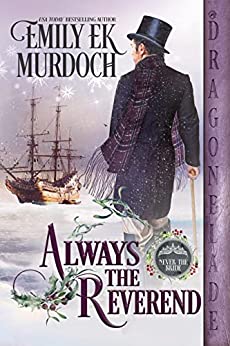
We’ve had William, the prim and proper oldest Chance brother; we’ve had John, the happy go lucky, himbo Chance brother; now get ready to meet rakish brother George…
George Chance, Earl of Lindow, is going to be rich. Probably. As soon as these cards behave.
And he most certainly doesn’t need a woman—a woman!—beating him at cards and then disappearing into Bath Society.
After all, he’s got his horses to concentrate on. And they really win start to win races. Soon.
But every time he attempts to concentrate, the irritating and beautiful woman keeps appearing and beating everyone around her at cards. An outside chance, every time.
To Miss Doris Loughty—Dodo to her friends—it is not an outside chance. It’s mathematics. Probability, calculations that are so simple to her and yet seemingly impossible to her.
But the winning itself isn’t important, it’s the money she so desperately needs that is the priority. So when the arrogant Earl of Lindow demands that she teach him all her tricks, and promises to pay for the pleasure…
Well. There’s no chance anything can go wrong, can there?
Secrets and misunderstandings circle a pair who only have an outside chance of being friends, let alone anything more. So why can’t Dodo step away from the entitled earl—and why can’t George stop spending time with this mathematical irritation wrapped in skirts…skirts he’s desperate to get underneath?
This novel continues the highly anticipated Chance family drama, with four brothers and just as many problems. Tropes include: bluestocking, opposites attract, secrets and lies, and of course, Emily E K Murdoch’s tried and true method of sizzling, joyful romance.
Those of you who know me may be a little surprised at this blog post – after all, I’m not American but a Brit!
However, I think it’s important to take the time to be grateful for the awesome things in your life, and although I probably shouldn’t need a day literally entitled ‘Thanksgiving’ to do so, it’s remarkable how it focuses the mind.
So without further ado, here is my list of things that I am thankful for right now:
my wonderful family – husband, parents, brother, and incredibly large extended family. What would I do without you all?
my marvellous readers – without you, my books are just words on a page! You bring them to life when you read them.
my computer – still up and running, helping me to craft my historical romances with very few crashes!
the internet – it may be sad in places, but the research ability it gives me from my armchair is just incredible!
cheese and chocolate – my writing reward foods that help me push through difficult chapters when I’m feeling uninspired.
my editors and cover designers – I don’t know where I’d be without them!
Netflix – the ultimate reward after a long day of keyboard bashing.
Do we have some of the same things on our list? Let me know yours in the comments below!
I adore teaching. I love breaking down something complicated, teaching it to someone else, and seeing them get it – and then apply it themselves!
I used to teach a lot of workshops, speak at events, and mentor, and I’ve spent some time working out how I can bring those elements into my writing career.
One of the things I really miss about my old day jobs was the amount of teaching that they included.
So I decided to do something about that! After all, I’m an entrepreneur – an authorpreneur if you will. First off, I’ve created two writing courses specifically for authors, based on my skills. You can find them here.
Frederick Chance, Viscount Pernrith, isn’t really a chance. Not entirely.
The illegitimate son of the late Duke of Cothrom, he’s tolerated by his three brothers and ostracized from the best circles. His title is a pity gesture from the family that never truly accepted him, and his illegitimate status means no one in Society will take him seriously.
Particularly not the latest diamond of Society…
The Right Honorable Miss Edie Stewart, on the other hand, is rather sick of Society’s attention. Diamond of the first water? What rot.
She’s far more interested in the forbidden. The edges of Society. Those she should, apparently, not be speaking to.
An accidental encounter leaves them forced, for now, to pretend an engagement—one that Frederick will of course break as soon as it is appropriate.
Most definitely break. Absolutely will break. Soon.
After all, it’s not like he’s got more than half a chance of actually wooing Miss Edie Stewart…does he?
This novel continues the highly anticipated Chance family drama, with four brothers and just as many problems. Tropes include: rich/poor, found family, fake engagement, and of course, Emily E K Murdoch’s tried and true method of sizzling, joyful romance.
I’m thrilled to be hosting Gemma Hollman, medievalist extraordinaire, to my website today! She has a brilliant new book coming out this week and it’s absolutely one you’re going to want to grab. Read on to get to know her better!
This is your third historical non-fiction, a huge achievement! What inspired you to start writing non-fiction books?
Funnily enough, it was actually other people! I had started a history blog after graduating university, because I loved writing and sharing history. It was special hearing friends, family and strangers say that they enjoyed my posts and learnt something new.
Whenever I spoke to people and told them about my Masters dissertation topic, every time without fail they would exclaim that it would make a good book. After one of my blog posts about one of the women in my dissertation went (what I considered at the time) viral, I figured that there really was an appetite for these women’s stories, and that I was just as qualified – if not more – than anyone else to write them. So I did some research on how to write non-fiction proposals, sent off a hopeful small paragraph, and found success! So my dissertation turned into my debut book, Royal Witches.
Your previous two books are all focused on royalty, whereas your new release, Women in the Middle Ages: Illuminating the World of Peasants, Nuns, and Queens takes a broader class view. What prompted this change?
I actually got approached by a publisher to write this book through an author friend of mine (shout out to Danièle Cybulskie) and at the time was in the midst of negotiations with my publisher for writing a third book (which will now, in fact, be my fourth!). I absolutely adored the pitch, and had never considered doing an illustrated history but thought it sounded immense fun. I had done bits at university about peasant women, and a smidgen on religious women, so I knew bits and pieces about them and that felt enough to give me some leads for my research. I was really nervous about taking on two contracts at once, but decided this was an opportunity I couldn’t turn down – and I’m glad I didn’t. Lots of people are drawn to royal history for many understandable reasons, not least because for women’s history in particular, this is the class that we tend to know most about individuals. But there is a wealth of information about all types of women in the medieval period, so it was great to be able to surface some of that.
One of the challenges of historical research is that women appear – in general – less often in the record. What was the biggest challenge you faced, especially the non-royal figures in your new book?
For me, it was trying to find specific examples of named, known women among the peasant classes. I talk a lot in generalities in the book, to give an idea what life was like and what opportunities were available for women at the time, but I think readers always need to connect with an individual. Hearing that queens could lead battles, then reading about a specific queen who did, or that mystics could be so respected that kings would travel the country to get their opinions and having that proof by citing a particular example all help to flesh out the histories. It not only provides evidence for what you’re talking about, so that the reader doesn’t have to just trust you, but we long to hear about people who came before us, and learning people’s names and hearing even a one-line snippet into someone’s life from one thousand years ago is powerful. But we don’t always have that evidence for the lowest classes in society, and so making sure I didn’t lose that thread was important, but, at times, tricky.
Is there a woman or group of women that surprised you as you investigated the past for your new book?
It was actually the professional class of women that surprised me! I knew from things I had learnt in the past that lower class women did, obviously, have to work to make ends meet, but I thought this was generally limited to farm labour, the hospitality industry (serving food and drink at markets or inns), and the textile industry. But I was surprised to find out that women were actually present in pretty much any medieval industry. True, in certain industries their contribution was limited to menial tasks (take construction, for example, where they were mostly just tasked with carrying equipment and materials), but there were female sculptors, bead makers, illuminators, glaziers, and many, many more.
Your new release is a gorgeous book that highlights the imagery of women in the past. Why do you think it’s important to feature images of women in your book, not just written descriptions?
The visual record opens up so many threads that are left by the gaps in the written record. There were so many images of women in the book that I used that were the sole surviving piece of evidence that that woman ever existed. Following on from what I said before about the gaps in finding information about working class women, whilst the written records can be frustratingly silent, peasant women are found everywhere in medieval art.
People liked to draw and see the world as it was around them, so manuscripts and tapestries very often feature peasants in their everyday life. Another key point is that there were very few medieval women who wrote surviving documents until much later in the medieval period. But you did not have to be literate to create art, and so many of the images of women in my book were created by women. There was a plethora of self-portraits by women, which is amazing to see a woman making a conscious effort to record herself for posterity, but it’s just as wonderful to see the everyday textiles made by women’s hands too. It brings something the written record just cannot.
What is one thing that you want readers of your new book to discover or enjoy as they enjoy your release?
I hope the book just opens horizons for people, introducing them to countries, social groups, or centuries they are not familiar with. Even as a qualified medievalist, there were so many things I learnt writing this book and it’s opened up a whole new desire within me to learn more and read more, and it would be great if I could spark that in someone else, too. And I really, really hope that people enjoy the many beautiful, colourful images within (there are nearly 200 of them!) because they were a joy to find and are lovely to look at.
And as you said, this isn’t your first time writing history! Can you tell us a little more about your earlier projects?
I’d love to ask people to check out my first two books! My first, Royal Witches: From Joan of Navarre to Elizabeth Woodville, looks at accusations of witchcraft against royal women in 15th century England, amidst a backdrop of war and court intrigue. My second, The Queen and the Mistress: The Women of Edward III, follows the lives of Philippa of Hainault and Alice Perrers, the wife and mistress respectively of King Edward III of England, looking at how it was that two women of vastly different backgrounds won the heart of the same man and, as a result, found a seat at the heart of power.
Thank you so much for sharing your thoughts, Gemma, this has been fantastic! Where can my readers find you?
If you’re enjoying my new series, The Chances, I’m so pleased! I had so much fun writing these four brothers, and now book 3 – George’s story – is available for pre-order for just 0.99.
George Chance, Earl of Lindow, is going to be rich. Probably. As soon as these cards behave.
And he most certainly doesn’t need a woman—a woman!—beating him at cards and then disappearing into Bath Society.
After all, he’s got his horses to concentrate on. And they really win start to win races. Soon.
But every time he attempts to concentrate, the irritating and beautiful woman keeps appearing and beating everyone around her at cards. An outside chance, every time.
To Miss Doris Loughty—Dodo to her friends—it is not an outside chance. It’s mathematics. Probability, calculations that are so simple to her and yet seemingly impossible to her.
But the winning itself isn’t important, it’s the money she so desperately needs that is the priority. So when the arrogant Earl of Lindow demands that she teach him all her tricks, and promises to pay for the pleasure…
Well. There’s no chance anything can go wrong, can there?
Secrets and misunderstandings circle a pair who only have an outside chance of being friends, let alone anything more. So why can’t Dodo step away from the entitled earl—and why can’t George stop spending time with this mathematical irritation wrapped in skirts…skirts he’s desperate to get underneath?
This novel continues the highly anticipated Chance family drama, with four brothers and just as many problems. Tropes include: bluestocking, opposites attract, secrets and lies, and of course, Emily E K Murdoch’s tried and true method of sizzling, joyful romance.